

In this article, we’ll explain the difference between ordinary ovens and dedicated DTF ovens, provide a step-by-step guide on how to cure DTF powder with oven, and share essential tips for achieving the best results.
Why Not All Ovens Can Cure DTF Powder Effectively
While it may seem convenient to use a household oven, it’s not always the best option for curing DTF powder. Here’s a comparison of standard ovens vs. dedicated DTF ovens:
| Feature | Regular Oven | Dedicated DTF Oven |
|---|---|---|
| Temperature Accuracy | ±10–20°C fluctuation | Highly stable and precise |
| Airflow Control | Lacks airflow optimization | Designed to avoid powder shifting |
| Heating Type | Usually bottom/top heating | Uses even infrared or tube heat |
| Production Capacity | Limited to small batches | Built for batch and bulk curing |
| Consistency | Inconsistent results | Uniform and repeatable |
It’s worth noting that a regular oven can actually cure the powder. However, the key issue is cost. An oven specifically designed for baking DTF powder is more cost-effective than a standard oven, mainly because the latter is typically used for baking food. The difference in function stems from the difference in effect.
For reliable results and professional output, using a DTF curing oven is highly recommended.
See also: Do You Have To Cure DTF Powder?
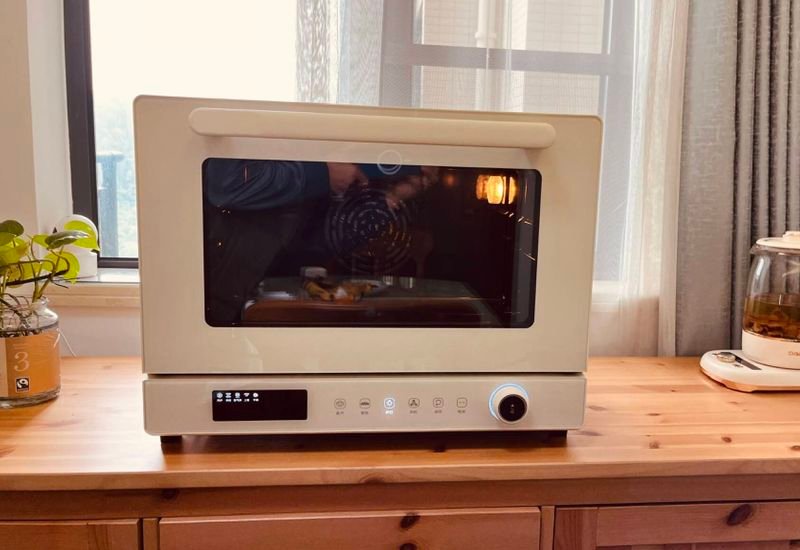
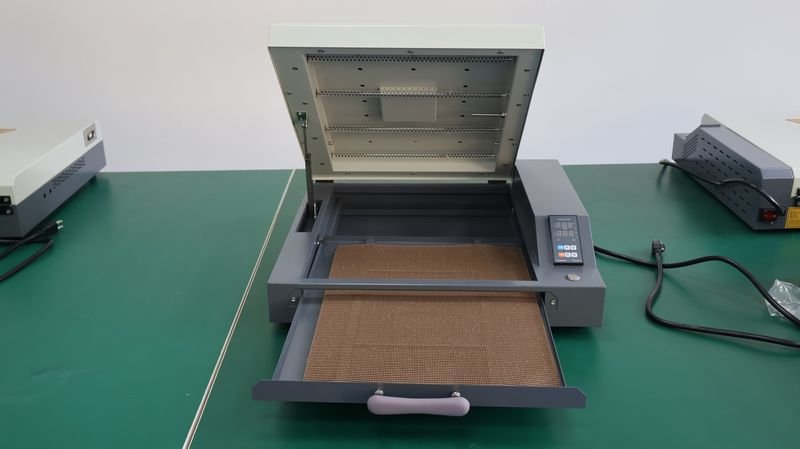
Besides using this standard oven, some people use a heat gun or heat press to cure the powder. While you can achieve consistent results if you master the temperature and time, that’s only limited to personalized DIY crafts. If you frequently have printing needs, it’s still recommended to use a dedicated DTF oven.
For cases where a hot press is used to consolidate powder, please refer to: Not Recommend To Cure DTF Powder With Heat Press
Cure DTF Powder With Oven Step-by-Step
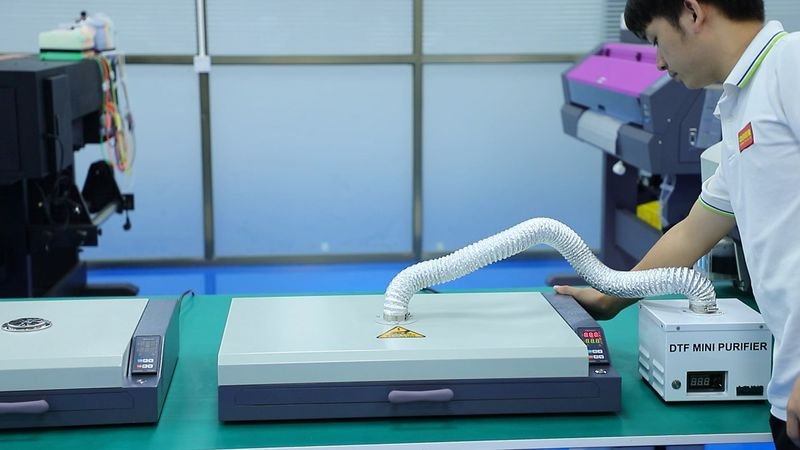
Here’s how to properly cure DTF powder with oven, especially using a purpose-built DTF curing oven:
1.Preheat the Oven
- Preheat the oven to the recommended temperature for your DTF powder type.
- The melting point of hot melt adhesive powder varies depending on the material. Low-temperature powder has a melting point of 85-90 degrees Celsius, while regular PU powder melts between 100-110 degrees Celsius.
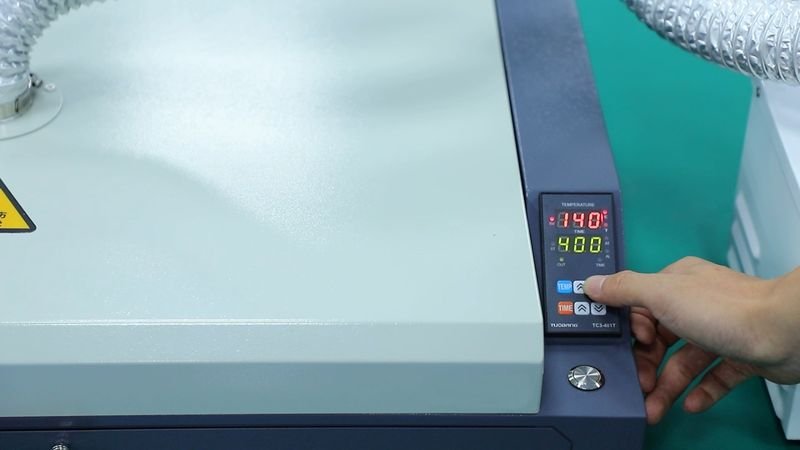
- For hot plate ovens, aim for 120–125°C for about 4–5 minutes.
- For heating tube ovens, aim for 125–140°C for 3–5 minutes.
Incidentally, if the baking temperature is not high enough, then the film may have a sticky back after winding. See also: What Causes Back Sticking In DTF Roll Film
2.Place the Printed Film Inside
- Ensure the DTF print (with powder already applied) is placed flat, coated side up.
- Do not stack sheets or allow the powder to fall off the edge.
3.Monitor the Curing Process
- Different powders exhibit distinct melting characteristics. Carefully observe the appearance of each powder as it transitions from melting to solidifying to determine if the temperature and duration are appropriate.
- Do not overheat—burnt powder can result in poor adhesion and color distortion.
4.Remove and Cool
- After curing (typically 2–5 minutes, depending on oven type), carefully take out the film.
- Let it cool completely before transferring to fabric.


Tips and Tricks to Properly Cure DTF Powder
- Always test cure a sample before large batches.
- Use a digital thermometer or oven thermometer to verify accuracy.
- Avoid using ovens with direct top flame or poor ventilation—they can cause yellowing or uneven curing.
- If your film curls, use a heat-resistant tray or magnetic sheet to keep it flat.
- Keep curing time consistent—set a timer every time to avoid under/over-curing.
FAQ
Q1: Can I use a kitchen oven to cure DTF powder?
Technically yes, but it’s not recommended due to temperature instability and airflow issues. Use a dedicated DTF oven for better results.
Q2: What temperature is ideal for curing DTF powder?
Most powders cure at 120–140°C, but always check the manufacturer’s instructions.
Q3: How do I know when the powder is fully cured?
When the powder appears glossy and smooth across the entire print, it’s cured. If it still looks grainy or powdery, it needs more time.
Q4: What if I overheat the DTF powder?
Over-curing can cause the adhesive to crystallize or yellow, leading to poor bonding and visual defects. Lower the temp and shorten the time.
Q5: Can I use a heat gun instead of an oven?
Yes, for spot corrections or small jobs, a heat gun can be used by hovering 1–2 inches above the print until the powder melts.
Q6: Is a conveyor dryer better than an oven?
For high-volume production, yes. A conveyor dryer ensures faster and more consistent curing, ideal for business-scale operations.
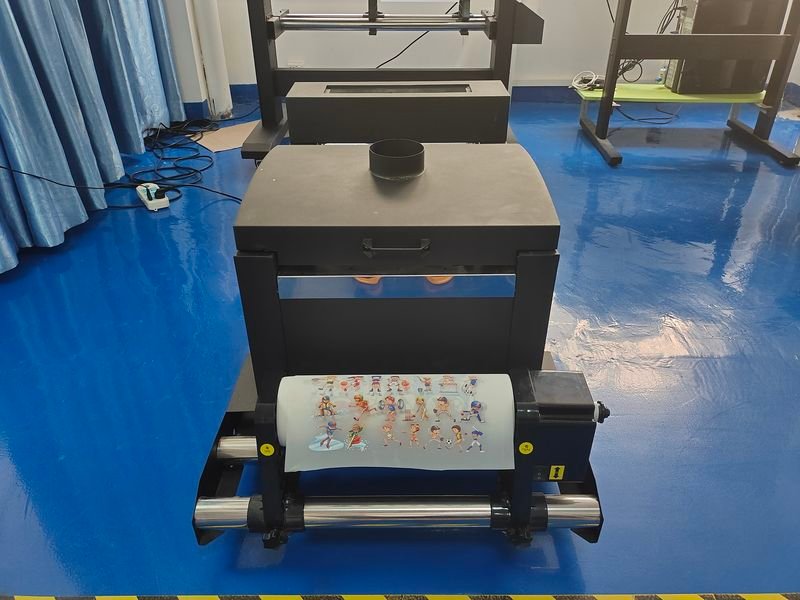
Conclusion: While curing DTF powder with an oven is achievable, using a dedicated DTF oven significantly improves consistency, quality, and ease of use. Follow the recommended temperature and timing closely, and always monitor the curing visually for best results.