

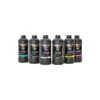
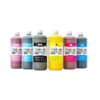
What Are Sublimation Ink?
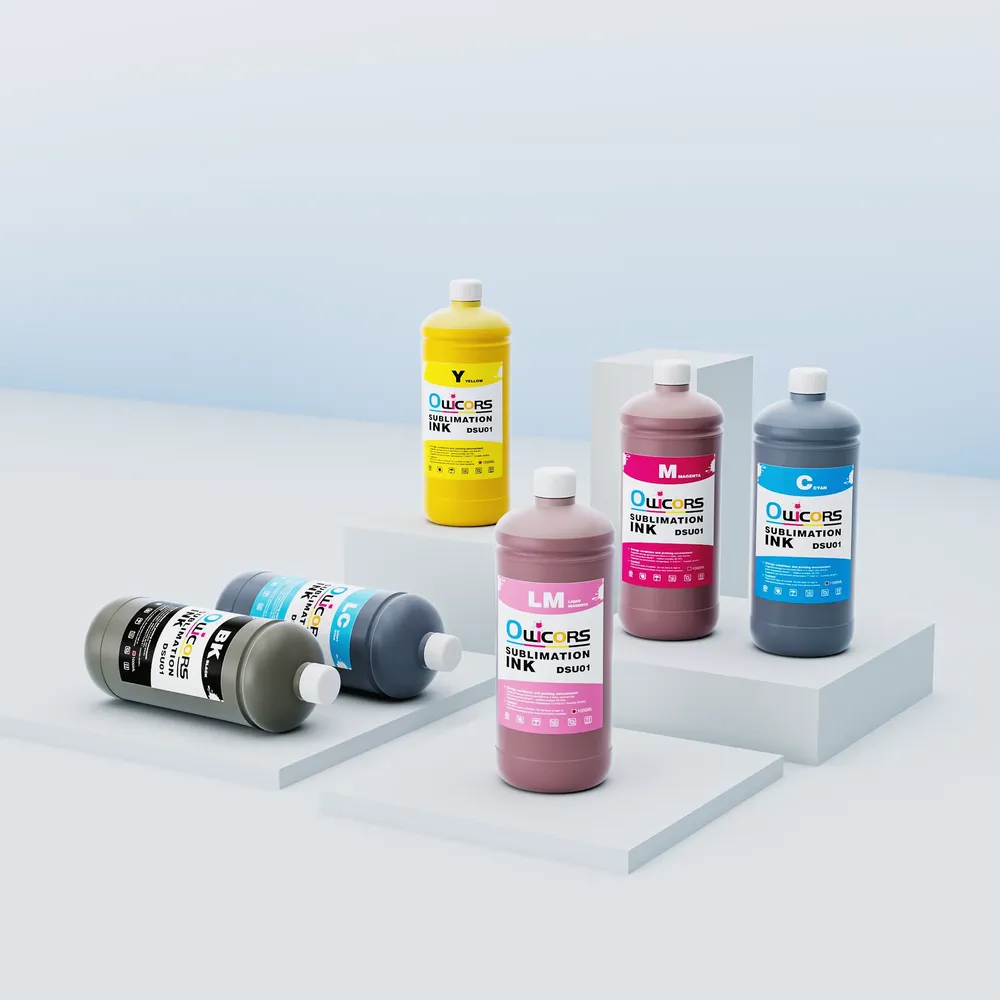
Sublimation ink is a highly specialized formulation crafted specifically for the sublimation process. Unlike the standard ink found in everyday office printers, it boasts unique properties tailored for high-performance transfer.
There are two distinct types: aqueous sublimation ink and solvent sublimation ink.
What sets sublimation ink apart is its remarkable ability to transition directly from a solid to a gas when exposed to heat, making it ideal for vibrant, durable prints on a variety of materials.
Sublimation ink is a unique blend composed of dye particles that are specifically engineered for use in sublimation printers.
These dye particles remain suspended in a liquid carrier without dissolving, ensuring optimal performance for the printing process.
The very essence of sublimation ink is tied to the sublimation printing process itself. Where the ink undergoes a fascinating transformation—transitioning from solid to gas—to produce vibrant, long-lasting prints on various materials.
How Do Sublimation Inks Work?
Known for producing ultra-high resolution images and intricate designs, thermal sublimation inks are specifically designed for use in dye-sublimation printers.
These specialized inks work perfectly with printers for precise, vibrant color reproduction. It is important to note that sublimation inks are not compatible with all sublimation printers, and individual printers require specific inks for use.
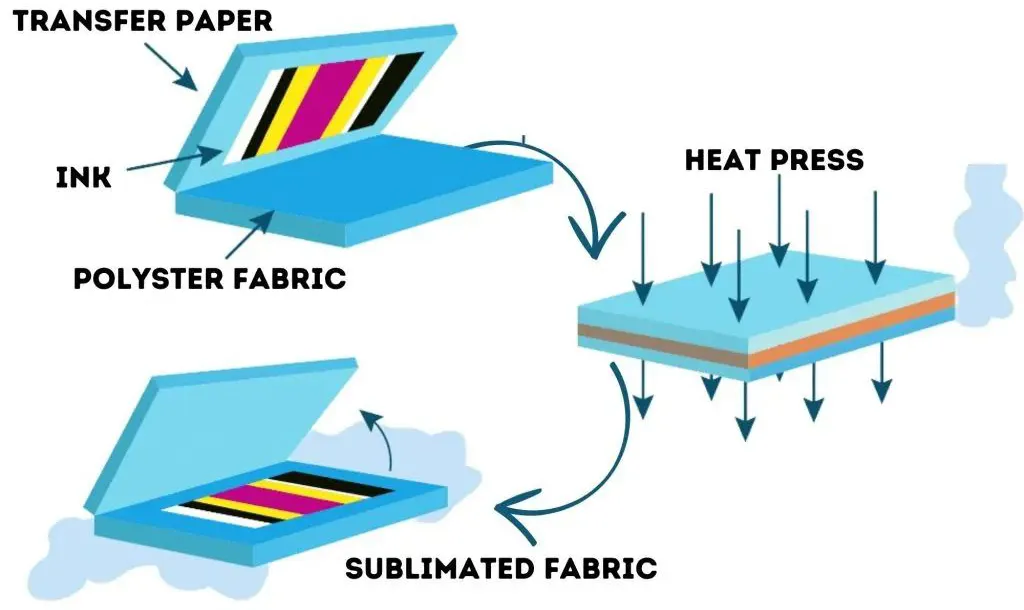
Usually the printer prints the ink as a design onto the sublimation or thermal transfer paper, ready for the next step of heat press transfer.
After the image is printed onto paper using a sublimation printer, it is ready for thermal transfer. Under heat and pressure, the dye particles in the ink melt and transform directly from a solid to a gaseous state.
The vaporized ink diffuses into the polyester fabric and permanently bonds with the material, creating a stunning, high-quality print.
Dye sublimation inks are unique in that they produce reverse images on heat-resistant sublimation paper.
Once transferred to a specific fabric, these reversed images become the final print, commonly seen on custom patterned t-shirts and other garments.
The beauty of this process is that once the ink is incorporated into the fabric, it becomes an integral part of the garment, ensuring that the design remains vibrant and resistant to fading.
Four Applications For Sublimation Ink
Sublimation inks offer an extensive range of applications, making them incredibly versatile in the printing world.
As traditional printing faces growing reliability concerns, sublimation printing technology has emerged as a superior alternative, thanks to its ability to produce high-quality, long-lasting prints. The numerous benefits of sublimation printing, from vibrant colors to durable results, have made it a preferred choice across various industries.
As a result, thermal sublimation printers are gaining traction and becoming an important tool in areas ranging from apparel to promotional products, demonstrating their invaluable role in modern-day printing needs.
Textile industry
Imagine vibrant, full-color images and eye-catching designs coming to life on your T-shirts. Thanks to sublimation printing, textiles such as polyester garments, including t-shirts, sweaters and socks, can be made beautiful.
The advantage of sublimation printing is that it can be combined with specific fabrics. What’s more, the prints produced by this method are not only visually appealing, but also extremely durable.
After several washes, these patterns are not prone to fading, peeling or cracking, making them ideal for creating durable garments.
Gift industry
There has been a surge in the demand for personalized and customized prints on everyday items and dye sublimation printing is leading the way.
This versatile printing method allows for striking images and designs to be printed on the gift industry. Items like mugs, cell phone cases, and flags, which are common in life, can be addressed using sublimation printing.
Furniture industry
Furniture items such as curtains, sheets, and quilts can also be addressed using sublimation printing. Printing these types of items requires specific printers that have the ability to print on large, wide-format substrates.
Sublimation printing has long had the ability to break through the print area as it has evolved, but usually these types of products are not the primary need for sublimation printing.
Special customization
Sublimation inks have substrate requirements, but customization is possible. If your printing material isn’t compatible with sublimation, a special coating can be applied to the substrate’s surface to enable sublimation printing.



See also: Is DTF Ink And Sublimation Ink The Same?
5 Pros of Sublimation Ink
Sublimation ink is not everything. You need to be aware of its advantages as well as the disadvantages I’m going to talk about next in order to take a comprehensive view of this product.
But before you recognize the facts, you have to be clear about one thing: “Sublimation ink cannot be used in other types of printers! “
The richness of printed colors
Sublimation ink is the secret to achieving vibrant, high-quality colors that will not only attract customers, but also take your DIY projects to the next level. The ink’s unique process allows it to bond effortlessly to polyester fabrics and specially coated surfaces to create special designs that will stay vibrant for a long time.
In contrast to other printing inks, DTF inks and UV inks cannot deliver this effect. It can be said that in the printing industry, different forms of printing are created for different applications.
Durability and Longevity
Sublimation ink is more durable and long lasting after printing from the sublimation printing process itself.
It turns the graphic design into a part of the substrate as if it is something that the material itself possesses! But what you need to know is that durability doesn’t mean that it’s the same in all scenarios, it actually has to do with the quality of the ink.
Especially products that are geared towards outdoor scenarios are not always truly durable, even after sublimation printing!
In everyday life, the durability and longevity ensured by sublimation printing is achievable. It’s just that if you want to be rigorous about it, then it actually has its own limitations.
Soft and comfortable finish
The issue of hand feel can be a unique advantage of sublimation printing. This is because the feel is directly derived from the substrate you choose!
As mentioned before, sublimation printing is realized through the sublimation principle. Therefore, it can be said that there is no feel problem, as long as your substrate is suitable for sublimation printing can be.
This is a clear advantage over the DTF printing process. Which always gives the impression of a pattern attached to the surface of the substrate.
Have customizability
The customizability of sublimation inks stems from two statements. One is that the ink matches the corresponding printer, and you can’t use a certain printer without using a certain ink.
The second is that the printing substrate can be made available for sublimation printing in a specific way.
The problem of customizability in the first category arises from competition in the market. In the printing industry, the cost of printers is not nearly as consuming as the cost of consumables.
Often a printer is purchased to last a long time, while ink is consumed constantly! Therefore, the printer manufacturers usually limit the type of ink used in their printers in order to make their business last longer.
The second type of customization issue stems from the actual need for customized printing. Sublimation printing is not suitable for all substrates, it is only suitable for specific substrates!
But sublimation printing can be made possible by applying a special material that covers the surface of the substrate with a coating.
Long-term control of cost advantages
There are an increasing number of inks on the market today that are compatible with most printer printheads, and sublimation inks are no exception.
With the gradual upgrading of compatibility, customers with printing needs can also get the corresponding benefits. And one of the most obvious is cost control.
There is an irrationality in the price of specific sublimation inks, which is why compatible inks have come into play. Don’t think that compatible inks are inferior to specific inks, in fact you just need to judge based on the printing results.
3 Cons of Sublimation Ink
After talking about the advantages of sublimation ink, let’s look at the disadvantages next.
Upfront costs
High upfront costs are an inevitable challenge in sublimation printing. Both sublimation inks and printers come with significant trial-and-error expenses.
This has led to the availability of smaller, lower-capacity inks and printers on the market. However, due to the process itself, tricky problems frequently arise. Sublimation is a magical process, but when put into practice, troubleshooting becomes a significant cost factor.
Furthermore, you’ll need a specialized heat press, which is far from inexpensive.
Printing substrate limitations
To be precise, the biggest problem with sublimation printing is that it requires the substrate to be able to withstand “high temperatures”.
If the substrate does not meet this requirement, then it is not suitable for sublimation printing. Even though there are special ways to solve this problem, it can still be tricky when you practice it.
Sublimation inks should not be sublimated onto unsuitable substrates, as this will result in wasted costs!
Substrate color limitations
Sublimation ink is generally suitable for printing on white substrates. Although there are also ways to solve the dark-colored substrate, but that is not good compared to other printing processes.
The reason for this phenomenon comes from the characteristics of the sublimation ink itself and its printing process. Sublimated inks do not show accurate colors on dark substrates.