

Let’s take a closer look at what causes back sticking in DTF roll film, and more importantly, how to prevent it.
What Is Back Sticking in DTF Roll Film?
Back sticking refers to the situation where, after printing and curing a DTF film, the printed surface pattern sticks to the back of the film roll when it’s being rolled up. Parts of the design may peel, distort, or come off completely. As shown in the picture below, some of the pattern has adhered to the back of the film.
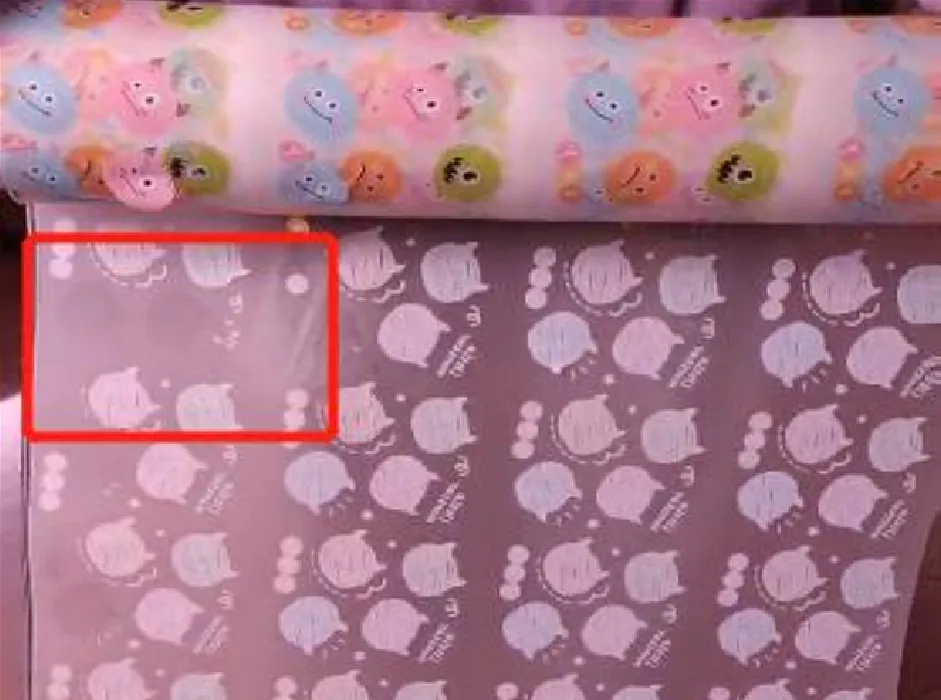
Sometimes, the issue is minor—just a few smudges or pattern losses. But in serious cases, entire sections of the printed film become unusable. This not only affects production quality but also leads to wasted materials and time.

The quality of the adhesive and the film itself can also play a role in back sheet adhesion. Poor film quality can sometimes cause difficulties in peeling. For more information on this phenomenon, please refer to: What If The DTF Film Difficult To Peel After Transfer?
Why Does It Happen?
There are a few common reasons behind back sticking in DTF roll film:
1. Powder not cured complete
After the film has passed through the curing oven or shaker, the hot melt adhesive is still soft. If the film is rolled up immediately while still hot, the ink and incompletely cured powder will easily stick to the back of the roll. This generally has something to do with the temperature setting.
By the way, if the powder is not fully cured, it can even cause the powder to stick to the powder. Please read on for more details: DTF Powder “Sticky Powder” Phenomenon Causes And Solutions
2. Rewind Tension Is Too High
If the rewinding tension is too tight, the pressure between layers increases. Combined with residual heat, this can easily lead to sticking between the printed surface and the film’s backside. The tension itself can cause the pattern to peel off and stick to the back of the film due to stretching.

3. Poor Compatibility Between Film and Hot Melt Powder
Not all powders and films are a perfect match. Some hot melt adhesives don’t bond well with certain film backings. If compatibility is poor, the ink layer is more likely to separate and stick. Supplies that are not properly stored, in particular, can easily lead to similar problems.
How to Prevent Back Sticking in DTF Roll Film
Thankfully, this issue is preventable. Here are a few steps that can help:
Check Cooling After Curing
Make sure the film has enough time to cool after curing. Use a cooling fan or allow the film to take a longer path before rewinding. If the film is hot to the touch during the rewind process, it needs more cooling time. You can touch the film at the very beginning of the test phase to see if the temperature to the touch is normal.
Most dithering machines require a relatively long path to cure the powder. As long as the curing powder is just efficient, the probability of back sticking is much less likely to occur.
Adjust Rewind Tension
Reduce the rewinding tension so the layers of film don’t press too tightly against each other. In some cases, you can also try skipping the rewinding process altogether and collect the film flat or loosely folded. Adjust the tightness of the rollers on both sides for a looser winding process.

Use Compatible Materials
Switch to a hot melt powder that works better with your film type. This is especially important if you have recently changed suppliers or film types. Even a small difference in formulation can result in a big change in material properties. Before starting a new business, you can prep some powders from different manufacturers for print testing to see which ones work better with your film.
Here I highly recommend using the same manufacturer for both film and powder. This will allow for a shorter start-up lead time for the business. See also: Why You Should Not Mix DTF Supplies.