



In order to get an accurate picture of how these two phenomena manifest themselves, we’ve found ways to restore them and show you some of the possible causes and solutions.
What is DTF Film Pattern Warpage?
First, let’s talk about what pattern warping is.
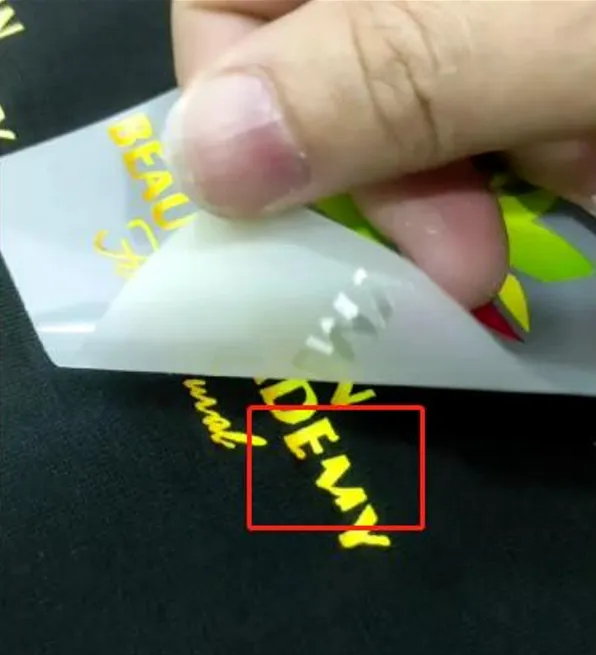
DTF Film Pattern Warpage refers to a situation where, during the heat press stage, the design doesn’t fully adhere to the substrate. Instead, part of the pattern lifts up or curls at the edges during the film peeling process. This is more likely to occur when using hot peel films and is rarely seen with cold peel films.
It occurs as in the picture below, where a closer look reveals that parts of the pattern are not adhering to the fabric, creating warped edges and showing signs of peeling.
In contrast to film warpage, there are also instances where peeling becomes difficult. There’s a correlation between the two, which you can read about here: What If The DTF Film Difficult To Peel After Transfer?
Why Does DTF Film Pattern Warpage Happen?
There are two main reasons for DTF Film Pattern Warpage:
- Fabric softness and softener residue: On soft fabrics treated with softeners such as milk silk, the hot melt adhesive powder may not penetrate completely, resulting in poor adhesion. Inevitably, fabric softener is used in the process of washing clothes, a product that can cause pattern warpage.
- For a more precise statement about softeners, check out this introduction.
- Insufficient heat pressing conditions: If the press temperature is too low (e.g. below 140°C), the DTF film may not transfer completely, similar to the effect that the adhesive will not activate properly, preventing the full transfer of the pattern to the substrate and resulting in a warped pattern edge.
- Most DTF films are heat press transferred at temperatures between 145 – 165°C.
How to Solve It?
To reduce the risk of DTF Film Pattern Warpage, consider the following solutions:
- Adjust the heat press temperature to a range between 145°C and 165°C.
- Increase both the pressing time (from 6 to 9 seconds) and the pressure (from 4 kg to 6 kg).
By fine-tuning these parameters, most warping issues can be effectively avoided. If you are still experiencing this type of problem, try replacing the film with one that can be cold peeled.
What is DTF Film Pattern Jaggedness?
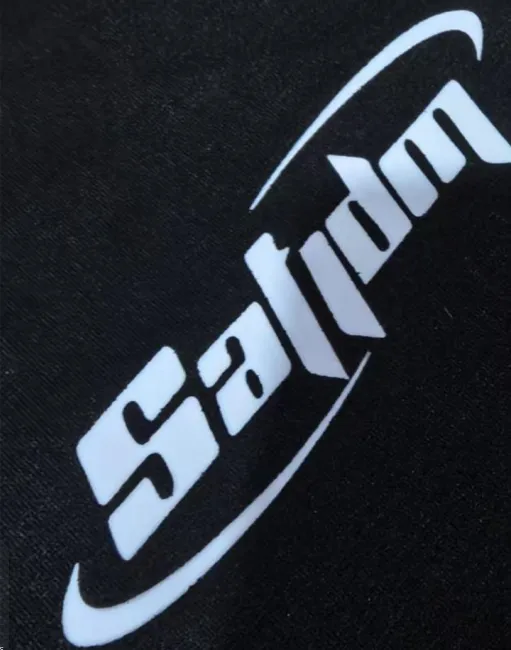
Another issue that may appear after pressing is DTF Film Pattern Jaggedness. This occurs when the transferred design has uneven, serrated-looking edges—almost like the outline of the image has been nibbled away. The result looks unprofessional and incomplete.
The image below shows exactly what “pattern jaggedness” looks like. If you have a high level of detail, you will find this intolerable.
Causes of DTF Film Pattern Jaggedness
DTF Film Pattern Jaggedness is usually caused by:
- Textured or stretchy fabrics: When using fabrics with textured or elastic surfaces, the transfer may not be fully integrated into the fabric, resulting in poorly defined edges. Fabrics are made of different types of materials and the DTF printing process does not work on all fabric materials.
- Insufficient or uneven pressing: As with “pattern warping” above, low pressure during pressing or uneven fabric surfaces can lead to improper transfer of design edges. Another reason is that the heat press has been in use for too long and there are dents in the flat surface of the heat press plate, resulting in uneven force on individual heat press areas.

How to Prevent Jagged Edges?
Here are some practical tips to minimize DTF Film Pattern Jaggedness:
- Increase the pressing time slightly (6s → 9s) and raise the pressure (4kg → 6kg).
- Ensure the fabric is laid flat and evenly before pressing. For textured fabrics, you may consider double-pressing for better results.
- You can prepare a platen for smoothing the surface and treat the fabric before each transfer.

Why Are Pattern Warpage And Pattern Jaggedness Discussed Together?
Both DTF Film Pattern Warpage and DTF Film Pattern Sawtooth have to do with not setting up or using a good heat press. That’s why we put them together in this discussion.
There is actually a lesser noticed issue here, and that is the surface maintenance of the heat press. This type of equipment relies heavily on the heat of the heat platen to do its job. And if you don’t think about treating the fabric to make it neat before each transfer. Over time, the heat platen can become damaged. Resulting in a similar phenomenon with one of your heat press transfers.
If you find that following all of the above doesn’t solve the problems, then it’s possible that you’re experiencing problems in other areas. You can let us know via the comments section and we’ll answer it for you.