

DTF hot melt powder introduction
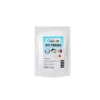
The root of the DTF printing process is for the ink to adhere to the fabric. Since the ink itself does not have adhesive power, if the ink itself had adhesive power, the ink would easily clog the printheads when printing is performed. In order for the ink to adhere to the fabric, DTF powder must be used. This powder, also known as DTF hot melt “glue” powder, requires a special oven (DTF oven) to melt the powder. All you need to do is sprinkle the powder onto the inked film.
DTF powders do not only provide adhesion, but also wash resistance and crack resistance for transfer patterns.
Some DTF powder types offer excellent elasticity and texture to the transferred design. Other types compromise elastic properties to guarantee better wear resistance and rigidity. Still, all DTF powder types are necessary to ensure your design will stick to the shirt surface.

What are the ingredients in DTF hot melt powder?
DTF powders are generally made from chemical resins, polymers and additive blends, with the resins being the source of powder adhesion. The resins are what provide the adhesion of the powder, while the polymers and additive blends provide a wide range of tolerance or resistance to the powder. The difference in powder type is the difference in the polymers and additive blends used.
Different colored powders will vary in material, for example white toner usually contains pure polyurethane, while black powder is based on rubber powder and activated carbon. Powders will also be categorized by particle size, including fine, medium and coarse.
Due to the chemical nature of the powder itself, good quality powders are usually tested for safety, mainly to show that they do not cause air pollution or other chemical reactions during application. It is generally recommended that safety measures be worn during the use of the powder to avoid further repercussions.
Differences between three different compositions of DTF hot melt powders
In addition to differences in particle size, there are some differences in the type of composition itself, depending on the production methods used by different producers. Differences in composition give the powder its reaction on different substrates.
TPU
TPU (thermoplastic polyurethane) is the most common DTF powder component on the market. The white DTF powder contains a lot of TPU, and the powder made with TPU has a better guarantee of elasticity and durability. If you don’t want the pattern transferred onto the fabric to crack very easily, you should give the transfer pattern a powder that contains TPU.
It’s important to note, however, that using this thermoplastic polyurethane powder doesn’t mean that you can stretch the fabric as much as you want without cracking the pattern; in fact, it can’t withstand particularly high levels of stretching at all.
PES
DTF powder with PES (polyethylene sulfide) content will be harder than DTF powder with TPU content, and the higher rigidity of the hardness means that the elasticity will be reduced. It also means that it has better abrasion resistance. This results in longer lasting durability of the pattern transferred onto the fabric. Usually powders containing PES are used for printing on cotton garments because they do not stretch.
PA
DTF powder with PA (polyamide) composition is a new composition that combines the advantages of TPU (thermoplastic polyurethane) and PES (polyethylene sulfide) compositions. It has the elasticity advantage of the TPU component and the rigidity advantage of the PES component. In practical applications, it offers higher print compatibility.
While not as popular as thermoplastic polyurethane, PA powder is ideal for printing applications requiring superior abrasion resistance.


Why you must use DTF hot melt powder for printing
DTF powder exists because of DTF printing, and although other powders can help, it is still recommended that you just use DTF hot melt powder. The reason is as follows:
- Easy to use
The market’s unique naming of this powder is well-deserved. While other powders can achieve similar results, none are as straightforward as DTF powder. Using other powders requires careful consideration of dosage and detail at every stage, but DTF powder simplifies the process.
Using DTF powder directly for DTF printing is a smart choice, skipping the steps in handling other powders in one step!
- Ensure print quality
If you use other powders to do DTF printing, then you may encounter that it is easy to crack, the pattern is not clear enough, the pattern is not resistant to washing, or even cannot be transferred! And the energy and time you need to spend in order to solve these problems is long, and also need you know the related technology. In this way even if you ensure the printing quality, but also wasted a lot of resources!
Why don’t you just use DTF powder to ensure the printing quality, save your energy and time, one step at a time?
- Cost advantage
The above two points explain why we don’t use other powders. This isn’t to say other methods aren’t suitable for DTF printing, but choosing DTF powder offers significant efficiency improvements. This is especially true for small and medium-sized printing businesses. Where increased efficiency and controlled costs make it an ideal starting point.

How to Use DTF Powder?
When using DTF powder, the most critical points are “adding method” and “melting”. In the current printing industry, the way to add powder can be either “manually sprinkle and then manually shake the powder” or “automatically shake the powder machine”. Manual powder and shake powder can avoid many problems, but there will be some loss in efficiency. The automatic powder shaking machine is much more efficient under the premise of good settings.
The purpose of shaking off the powder is to remove excess powder around the design, preparing it for the next step: “melting.” Melting requires baking, hence the use of a dedicated DTF oven. Some advanced DTF printers include a built-in “powder shaker,” which not only shakes off the powder but also bakes and cures it. Finally, the transfer process begins. Before this, it’s advisable to allow the baked powder and film to cool slightly.
About the use of DTF hot melt powder can be divided into the following steps:
- Spread the powder evenly after printing the pattern onto the film.
- Manually dithering the film to ensure that the powder adheres to the film is evenly distributed. If the printer has an automatic dithering machine, you only need to set the parameters.
- Bake the powder in a DTF oven to “melt” it, and leave it to cool for a while.
- Transfer the pattern on the film to the substrate by means of a heat press.

FAQs
What is the optimum baking temperature for DTF powder?
The melting point of the powder is generally in the 90-110 degree range. The heating plate oven is generally around 120-125 degrees time recommended 4-5 minutes. Heater ovens are generally in the 125-140 degree range with a recommended time of 3-5 minutes.
Just judge by the type of device you have.
How long is the shelf life of the powder?
Normally it is one year. You need to store it well to avoid clumping and moisture from occurring.
How to solve the problem of powder sticking?
Usually to solve the problem of powder sticking to powder, you need to start from adjusting printing parameters, choosing the right hot melt powder, optimizing the baking process, improving the environmental conditions, replacing the film, checking the powder spreading process and these details.
If you are interested in more in-depth details about storing powders and the causes of sticky powder problems, click here.